Living with IRDs: Insights and Inspiration from the Front Lines

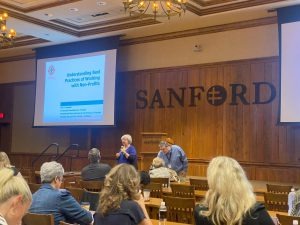
The 2025 LCA Family Conference in Minneapolis, MN, offered four informational panel sessions, where the 135 attendees learned about living with Leber congenital amaurosis (LCA) and other inherited retinal diseases (IRDs), participating in clinical trials, and the latest research and therapy updates.

The first session, “Living with an IRD,” was moderated by Laura Manfre, co-founder and Board Chair of Hope in Focus. This session is often a highlight for families wanting to learn how to support their children diagnosed with an IRD.
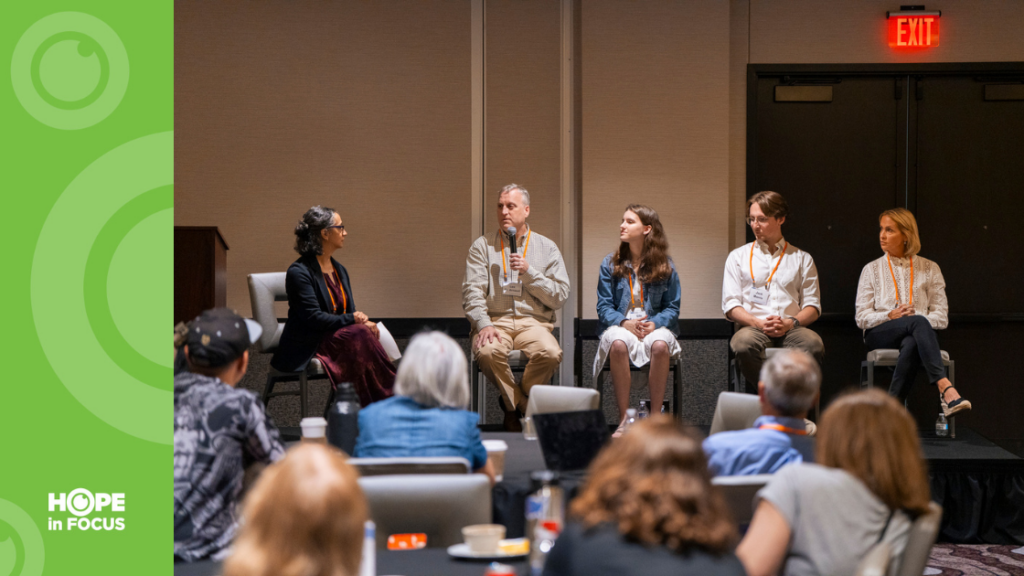
Laura Manfre, Lee St. Arnaud, Elle St. Arnaud, Jack Morris, Leslie Morris

Laura posed questions to the four panel participants, which included 18-year-old Elle St. Arnaud, who has LCA IQCB1/NPHP5 and is attending Boston University this fall, and her father Lee St. Arnaud, and 22-year-old Jack Morris, who has RP CRB1 and is a recent graduate of Brown University, and his mother Leslie Morris.

Below are some of the panelists’ edited responses to Laura’s questions.

What has your school journey been like? What challenges have you faced, and how did you advocate for yourself?

Elle St. Arnaud

Elle was educated in the public schools with a paraprofessional supporting her in class from preschool through fourth grade. She said that a key to her success was learning to advocate for herself early on by participating in her individualized education plan (IEP) meetings, explaining her accommodations to teachers, and taking responsibility for communicating her needs, especially regarding her vision. Elle reflected on the importance of self-advocacy and how it has shaped her life.

“It’s vital for kids to be able to explain their accommodations, as others often don’t fully understand visual impairments,” she said. “While I’ve had positive experiences, I’ve also faced challenges, such as being discouraged from joining the debate team or taking advanced classes. I pursued both anyway, proving that being blind doesn’t limit one’s ability to succeed. Self-advocacy and standing up for your needs are essential life skills.”

Jack Morris

Jack started in public schools and later switched to a private school. His vision was relatively good throughout most of his schooling. Jack thought he might have done even more to advocate for himself. Still, regular meetings with teachers and advisors proved very helpful. He said, “When people understand what you need, they generally want to help.” Although at the university level, he said some professors were resistant to making accommodations.

He stressed that “Accommodations are not favors—they are necessary for success. Blind individuals are not less intelligent; they simply need equal access to materials to perform just as well as others. Having confidence in advocating for these needs is crucial, and legal protections like the ADA support this.”

As parents, can you share a little about your journey? How was it seeking a diagnosis, and what are some things you wish you’d known earlier?

Lee St. Arnaud

Lee explained that Elle and her older brother, Patrick, both have LCA. When trying to diagnose Patrick’s vision issues, he shared how difficult it was when the doctor offered only a brief response, instructing them to return in five months to confirm their son’s blindness. Overwhelmed, the family immediately reached out to resources like the Chicago Lighthouse for the Blind, which connected them with supportive networks and foundations.

Lee stressed the importance of parents being proactive and finding tools like a detailed year-by-year visual goals guide, which they used effectively in IEP meetings to advocate for their children’s needs. He emphasized the importance of being prepared, pushing for necessary services, and actively advocating for the child and family.

The St. Arnauds encouraged their children to participate in outside activities like adaptive climbing and the live hockey association. “So many times we were nervous and sweating bullets. But by the time we got done, the kids were like, you know what? We can do this!” Lee said.

Leslie Morris

Leslie said that Jack’s diagnosis with a recessive form of RP at age five came as a shock because there was no family history. She described feeling heartbroken and overwhelmed by a sense of loss and isolation. Despite these emotions, Leslie and her husband, Jason, chose not to accept discouraging responses from doctors. Instead, they took action—connecting with others affected by IRDs and becoming involved with the Foundation Fighting Blindness, where both serve as trustees.

Advocacy became like a second job for the Morris family, as they worked to ensure Jack had every opportunity for a full and meaningful life. Leslie said they didn’t want the disease to define their son, and they encouraged him to try various activities like baseball, football, swimming, wrestling, and guitar. “We focused on letting Jack decide when to step away from activities while gently steering him toward pursuits that offered long-term fulfillment,” Leslie said.

How do you give your child enough independence to grow and to learn, while also wanting to protect and keep them safe?

Lee St. Arnaud

Lee felt that they didn’t experience significant disagreements with Elle or Patrick regarding their ability to self-manage. He stressed the importance of balancing caution with encouragement and supporting early opportunities for independent experiences in the community without rushing the process. He also reflected on the importance of understanding your child’s interests as they mature.

Elle St. Arnaud

Elle immediately spoke up after her father, expressing her childhood frustration and conflict with her parents over having to take Orientation and Mobility (O&M) training particularly the inconvenience and social discomfort of being taken out of school. Despite hating it at the time, she admitted the lessons had long-term value, especially in promoting independence. She noted the importance of starting children early with independent tasks at home, like cooking and laundry, while pacing community-based skills more carefully. “I think parents should keep their children engaged in O&M even if the child resists,” Elle said. “Because it equips them with critical life skills—such as safely crossing the street—that pay off later.”

Leslie Morris

Leslie emphasized the importance of parental teamwork and unity, particularly when supporting a child’s journey toward independence. She admitted to being a bit of a helicopter mom. “My husband, Jason, and I agreed on things before letting Jack go out and try them,” she said. “Having somebody by your side through this journey is very important.” She added that when parents are aligned in decisions and approaches, it helps minimize conflict and makes the process smoother.
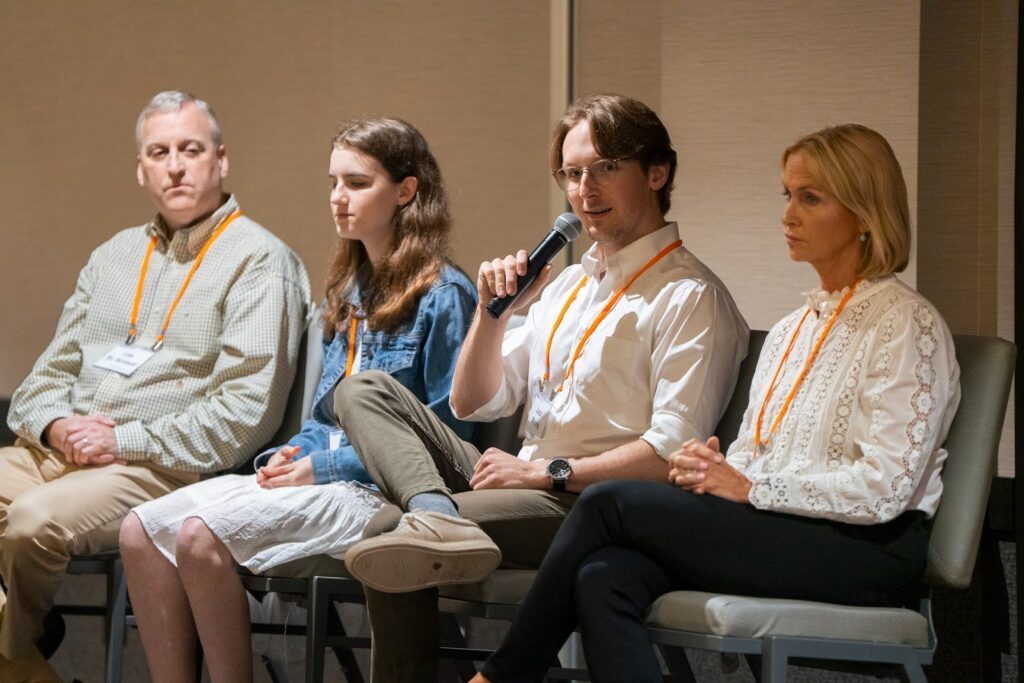
Panelists seated on stage during a clinical trial discussion, with Jack Morris speaking into a microphone

Jack Morris speaking at the 2025 LCA Family Conference

Jack Morris

Jack didn’t recall having major conflicts and expressed gratitude for the trust his parents placed in him. One slight regret he had was not wearing sunglasses earlier, due to self-consciousness. Jack said he appreciated the opportunity to try things—even fail—while still feeling supported and safe.

Much to the amusement of the conference attendees, Jack recounted a brief period when he was legally allowed to drive, a decision made with medical guidance that, in hindsight, seemed very questionable.

“I appreciated that my parents trusted me to be able to take care of myself. This journey makes you resilient, tough, and resourceful,” Jack said. “Kids can be very clever in planning solutions to their unique circumstances, and my parents trusted me in that.”

Community members have expressed that mental wellness and accepting vision loss can be difficult. Elle and Jack, what are your thoughts?

Elle St. Arnaud

“Not wanting someone to see your pain and not wanting to wear sunglasses or use a cane will likely peak around middle school,” Elle said. “No one wants to be different, and you want to be ‘on trend’ with everybody else.”

She added that having a para in the classroom with her all of the time was an inhibitor and made it harder for her to talk with other kids. “Parents should try not to hover when their child is with other children because it can make them feel less confident or social,” she said.

Elle said she made it a priority to share her experiences as a blind person with her sighted friends. “We’d make jokes about it, and I talk about it constantly. I’d share what I’ve experienced and every blind story I’ve had,” she explained. “I think that’s important because when you need to ask your friends for help, they are a lot more understanding because you’ve explained it and talked about it so many times with them.”

For example, she told her friends about walking into a door, which helped them be more aware that she might not see it, allowing them to take the initiative to guide her when needed. “I think the easiest way to be accepted is to talk more about your blindness so it feels more normal,” Elle said.

Jack Morris

“I think there’s a line to be found between letting a disease define you and rejecting that it’s a part of you, because retinitis pigmentosa (RP) has been a huge part of my story—a beautiful but also a tough part. It’s something that feels different and lonely, but also unifying and community-building,” Jack said. “If we can find ways to live in and with our disease rather than despite it, that’s where truth and freedom lie for me.”

He offered advice to parents, saying that they needed to be strong in ways that aren’t obvious. “One of the hardest things for parents is watching their child struggle. But sometimes the biggest strength is allowing them to struggle. Kids need to feel the full spectrum of emotions—challenge, loneliness, empowerment, and togetherness,” Jack said. “If parents can be there as a foundation, even when things are hard, and let them be hard before stepping in with action, that’s one of the most powerful and meaningful things they can do for their children.”

FROM THE WALL: Pushing Boundaries, Building Confidence

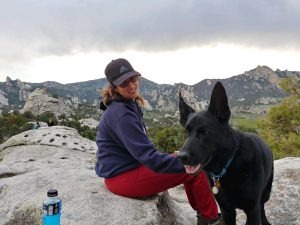
Throughout her 29 years, Michelle Ward Caton has embraced life with unwavering curiosity and gusto. Determined to test her abilities and not be limited by vision loss from Leber congenital amaurosis (LCA), she is, among other things, a competitive adaptive rock climber and teacher of the visually impaired (TVI).

Growing up in North Haven, Connecticut, Michelle’s route to an LCA diagnosis took time. Initially, her parents noticed that she wasn’t focusing on faces. “Once I was walking, I bumped into a lot of things! But when this was discussed with my pediatrician, he said it was Michelle being Michelle,” she said. “When I was three, we moved into a new house, and while running around, I hit my head on the kitchen island overhang. My concerned parents took me to a pediatric ophthalmologist, where my poor eyesight was finally confirmed.”

Several years later, the eye doctor detected white blood cells in her eyes and sent her to a Boston eye specialist. By the time they got to Boston, the white cells were gone. However, it wasn’t until she did genetic testing during high school that Michelle was diagnosed with LCA8 from a mutation in the CRB1 gene.

Michelle Ward Caton stands outdoors during a climbing trip with her first guide dog, Ryder, wearing climbing gear

Michelle on a climbing trip with her first guide dog, Ryder

The Journey

Early intervention services started at age three, and by age five, Michelle had a TVI. Refusing to be sidelined, she did everything that her older sister did at the same time. “If she learned to bike ride or swim, I did too!” Michelle said. We were only a year apart, and it was almost like being twins. But determined to keep up, I did many daring things for a blind person.”

Her resolve to play softball in elementary school was dashed, she said, “When my dad took me outside and tossed a few softballs at me until I realized I couldn’t play. When you’re a kid, you think you can do anything. Sometimes, you have to realize you can’t.”

Michelle’s parents exposed her to various activities, including the piano, flute, and bass guitar. Later, she participated in gymnastics and was a ballroom dancer throughout high school. “I did Brazilian jiu jitsu and then Muay Thai, a form of kickboxing, which my dad practiced with me, allowing me to get the rhythm of the sport and have incredible workouts,” she said.

In college, Michelle tackled the gym and weightlifting, and when she was at UMass Boston working on her TVI degree, she met a friend who did rock climbing. “I began climbing with an adaptive climbing group that participated in competitions,” she said. “I went to nationals and placed second, got on the United States team, and went to the international competition in France,” she said.

Rock Climbing Lessons

Michelle and her husband, Jason, continue to climb and discuss competing again. “It’s important to go out of your comfort zone. I still have some vision, and being outside and up high with a view is incredible,” she said. “When I’m climbing in the gym and hit the spot where I’ve fallen many times and finally figure out the right move and body positioning, it’s a small victory. It’s great getting to the top of the wall, whether I can see it or not. The top of the wall isn’t necessarily the prize. It’s the fact that you did it that builds confidence.”

Michelle Ward Caton competes on a climbing wall at the national adaptive climbing competition

Michelle at the 2019 national adaptive climbing competition

Children with visual impairments often find body awareness and balance difficult, but these can also be tough for adults. Sometimes, when Jason tells Michelle how to move on the climbing wall, getting her correct body part to the right location is challenging. “Jason might say to move my right foot three feet, and I move my left foot one foot,” she said.

Helping children with body awareness is something Michelle focused on teaching in her preschool classes during TVI training. “I’d set up obstacle courses for the children to climb over, under, or step through or over,” she said. “I think climbing and jiu-jitsu are some of the best sports for kids with vision impairments because they help build body awareness.”

Vision Changes

When Michelle was about 26, her vision dramatically worsened. “I abruptly lost acuity, and my nystagmus got much worse. There was no time to adjust,” she said. “I’ve always had some nystagmus but could focus through it; now my vision always vibrates.”

As a TVI, Michelle teaches braille, but she also uses it to access all of the appliances in her home. She also does most of her visual work in the morning because the nystagmus exhausts her by evening. “You have to adapt your scenario to your specific needs. It feels like I’m constantly adjusting. I keep puzzling things together to see what works,” she said. “This is the reality for everyone with LCA; each situation is different, and you must finesse things until something works.”

The Right People

Dating during college helped Michelle discern that “it’s the people that don’t care about my vision that make the best friends. I’d meet someone, and when they found out about my vision impairment, they would shift from ‘You’re cute!’ to ‘You’re a science project.’ They’d ask me how many fingers they held up and what I could see. I got all of the stereotypical questions.”

Michelle loves that her husband doesn’t care that she is blind. “Jason does things for me that I don’t even notice. I’ll be looking for something, and he will grab it, hand it to me, and walk away without commenting. Or he will get out of the car and offer me his arm. We never talked about my limitations—he just got it!”

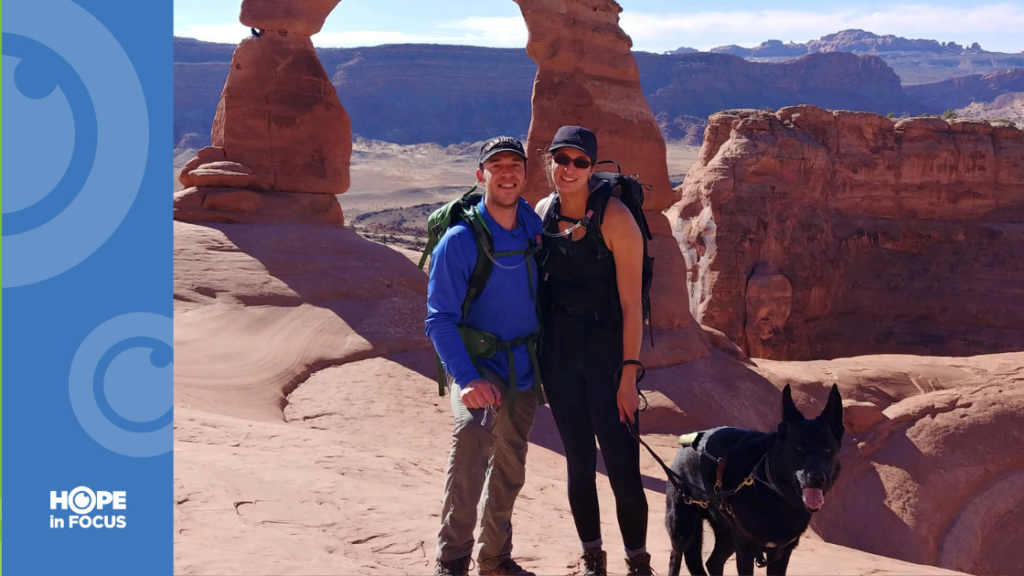
Jason and Michelle, with guide dog Ryder, at Arches National Park

She said finding supportive people who don’t coddle is essential. “Jason encourages me to learn new things that a friend might say are dangerous. Instead, he teaches me how to do it. He doesn’t make assumptions about what’s possible for me.”

A sense of humor is vital for navigating a degenerative condition; Michelle explained, “I trip and fall and knock things over all the time! My visual decline in the last couple of years has been very tough, which makes it essential to find someone who laughs with you. Being morose doesn’t work!”

Family Interactions

Reflecting on growing up with LCA, she said, “My parents always treated me like my sister. Being blind was a characteristic that only meant I did things differently. My sister didn’t acknowledge my being blind for a long time. I don’t think she fully realized what it meant. Instead, she would stare at me and say, ‘Just do it,’ which is what a big sister does.”

“My parents never wallowed in my diagnosis, and we had many real-life conversations about my vision loss. But my dad struggled because he knew my vision would get worse, and I would face lifelong challenges.” Michelle said. “In high school, we met Robin Clark, a teacher passionate about ensuring kids had the independent living skills to live successfully. We implemented creative strategies, worked on things at home, and discussed what would help.”

TVI Responsibilities

As a TVI, Michelle travels between schools in New Hampshire, helping elementary through high school-aged students based on their individualized education plans (IEPs). “I love working with the teams that work daily with the kids to support their vision in class,” she said. “Life with LCA is like rock climbing. Starting out, you have no idea what you are doing, but you feel your way along, and eventually, you’re competing!” 

BlueRock Photoreceptor Replacement Therapy Moving into a Clinical Trial

The development of gene therapies for inherited retinal diseases (IRDs) took off when young adults and children showed significant vision improvements in an early clinical trial for what would become LUXTURNAⓇ for LCA2 (RPE65 mutations). That was 2008. LUXTURNA became the first FDA-approved IRD gene therapy in 2017. Thanks to that success, dozens of gene therapy clinical trials are underway. Some target specific genes. Others are gene-agnostic, designed to preserve photoreceptors or harness non-light-sensing cells in the retina, an approach called optogenetics.

Cell-based therapies for IRDs have not advanced so quickly, with just a few clinical trials being launched. Gene therapies, which use human-engineered viruses to deliver the therapeutic gene, are not easy to develop or administer. But cell therapies, especially those for replacing lost photoreceptors, present additional challenges that have been difficult to overcome. These include determining the source and manufacturing of the cells, promoting their survival after transplantation, and enabling their integration into the host retina.

The launch of a Phase 1/2 clinical trial for OpCT-001, an emerging photoreceptor replacement therapy from BlueRock Therapeutics, is a big step forward for the IRD cell therapy field. The trial will initially enroll people with IRDs such as retinitis pigmentosa and cone-rod dystrophy. But the approach could also be relevant for forms of LCA that primarily affect photoreceptors.

OpCT-001 is comprised of photoreceptor progenitors—photoreceptors that haven’t fully matured. Researchers believe that progenitors have the best chance of integrating and surviving once they are transplanted and mature. The progenitors are developed from induced pluripotent stem cells (iPSC). To produce iPSCs, investigators take a small blood or skin sample from an adult human donor. The cells are then genetically tweaked to revert to a stem-cell-like state. As stem cells, they can be coaxed to develop into virtually any cell type in the body, including photoreceptors. Furthermore, billions of cells (many therapy doses) can be produced from the cell sample. The study will assess several dose levels of the therapy and is expected to enroll participants in sites across the U.S.

BlueRock Therapeutics is a wholly owned subsidiary of Bayer AG. The company licensed OpCT-001 from FUJIFILM and Opsis Therapeutics, a company co-founded by David Gamm, MD, PhD, a world-renowned retinal cell therapy pioneer at the University of Wisconsin-Madison. The Foundation Fighting Blindness provided significant funding over several years to Dr. Gamm and his team for the development of retinal and photoreceptor cell therapies derived from iPSC.

One should never get too excited about any emerging therapy in an early-stage clinical trial, especially for something as cutting-edge as a photoreceptor progenitor treatment. But if there is one scientist on the planet who can get photoreceptor replacement to work, it is Dr. Gamm.

Stay tuned.

Hope in Focus Attends Foundation Fighting Blindness Retinal Therapeutics Innovation Summit and Association for Research in Vision and Ophthalmology Annual Meeting

Hope in Focus Director of Outreach and Development Courtney Coates attended the Retinal Therapeutics Innovation Summit on May 2, 2025, hosted by the Foundation Fighting Blindness. This annual summit showcases over 25 presentations on advancing therapies, lessons learned, and progress on natural history studies and clinical trial endpoints.

Eric Hartman, Choroideremia Research Foundation with Courtney Coates

Highlights for the LCA community included:
Twelve-month clinical trial data for LCA5 showing a clear safety profile, clinically meaningful improvement in vision, and durability.
Lessons learned from the Editas gene editing trial for CEP290
The Road Ahead for SepulBio’s Antisense Oligonucleotide Therapy for LCA10 CEP290

Additionally, several presentations provided updates on programs for IRDs in various treatment modalities. Clinical trial endpoints continue to be an important topic of discussion as the field works to develop outcomes that are easy to measure, reflect a clinically meaningful improvement in vision, and can be validated for regulators.

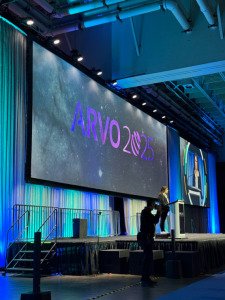
ARVO 2025 conference signage displayed at the annual meeting

ARVO 2025

The summit was followed by the ARVO Annual Meeting, an essential resource for research updates, early pre-clinical research posters, and networking with the entire ecosystem of ophthalmic drug development. We continue to monitor early research for ultra-rare gene mutations, consistently engage with industry to incorporate the patient voice into clinical trials, and promote policy positions that will benefit the rare disease and LCA community.

For additional questions, please feel free to reach out to Courtney at [email protected].

A New Chapter: Reflections on Seven Years of Hope and Inspiration

Angélica Bretón Morán, a 29-year-old musician and educator from Mexico, was born with Leber congenital amaurosis (LCA) due to RPGRIP1 gene mutations (LCA6). In 2018, she shared her inspiring story with Hope in Focus (HIF), and since then, she has attended several LCA family conferences. We checked in with her seven years later to see how her journey has evolved. Through a Q&A, Angélica reflects on her experiences and insights.

What changes have you experienced over the past seven years?

I graduated from college in 2020 with a degree in music as a pianist, just as COVID-19 started. The plan was to take two exams—one as a soloist and another with the chamber orchestra but the pandemic delayed graduation. Graduating students were instructed to upload their performances to YouTube, and our professors evaluated them. The results were announced during an online graduation ceremony.

In October 2020, I began an online master’s degree in education at Universidad Tecmilenio. At the same time, I was working on my project titled “Area of Musical Research for the Blind and Visually Impaired,” which I had been volunteering on since I was age 10. It resulted in my job as the creator, founder, and leader of that department, later renamed the Music Research Center for Visual Disabilities (CIMUDIV). I completed my master’s degree in 2022, became certified as a professional instructor to conduct workshops, took a leadership course, and completed a diploma in music psychology.

At ISU University, I began a doctorate in the Development and Innovation of Educational Institutions in November 2024 to create academic content about the inclusion of people with visual disabilities in professional music. This area has very little content developed by someone who has lived this reality firsthand.

Can you share more about your job?

I work at the Faculty of Music of the Universidad Autónoma de Nuevo León (UANL). As the coordinator, founder, and creator of the Music Research Center for Visual Disabilities (CIMUDIV), we make the curriculum accessible to students with visual disabilities, including creating braille sheet music and providing personalized student support. It is not a special program for blind students. Instead, students use the same materials and perform like their sighted peers in their classes. I teach musicography to students with visual disabilities so they can read sheet music, and I support their teachers when needed.

We are constantly searching for tools and strategies that make our work and the students’ learning easier, which involves researching, experimenting, and adapting. It’s not unusual to find people with visual disabilities who are active music community members, but much still needs to be done! Changing our mindset and that of society requires patience.

What has been encouraging?

Angélica Bretón Morán performs on stage at the 2024 Blind Concert in Mexico

Angélica Bretón Morán at the 2024 Blind Concert in Mexico

Something that thrilled me was the Blind Concert performance held in November 2023. Because it was canceled during the pandemic, I thought we might never experience it again. The concert, held for 11 years in various locations, raises awareness through music by taking the audience on an emotional journey. For me, music is a powerful language that reaches the deepest fibers of the soul. Seeing the entire cast reunited was an unforgettable and emotional experience. In May 2024, the concert was performed outdoors for the first time before 300 people, achieving another milestone.

What are your observations related to LCA?

Learning never stops, and it is fantastic to see how the topic of LCA has progressed. We’re talking about clinical trials, experimental treatments, research, and new diagnoses, things that seemed unthinkable 20 years ago. When I was younger, we weren’t sure if I had LCA. Now, hearing that someone has a genetic diagnosis is incredible.

It’s become easier to access the LCA community, which is more informed and has more people willing to share their experiences. The support network is stronger, and patients of all ages are involved. Social media and Facebook groups allow us to stay in touch with other families and organizations like Hope in Focus.

One exciting breakthrough is that Odylia Therapeutics is developing a gene therapy for my mutation, the RPGRIP1 gene, and testing it on mice. As a 29-year-old blind person, the idea that my vision might improve in the future is exciting and terrifying!

What are your thoughts about the LCA Family conferences you’ve attended?

My experiences at the conferences have been wonderful! I met many people whom I now care deeply for. At the 2023 conference, we met Toprak and her family from Turkey. Toprak’s parents saw my story on the HIF website, and it was touching to hear that my story gave them hope. It’s important for adults with LCA to attend the conference and share their experiences with other families.

Angélica Bretón Morán stands beside Dr. Emily Place at the 2023 Hope in Focus Family Conference in Indianapolis

Angélica Bretón Morán (right) with Dr. Emily Place (left) during the 2023 Hope in Focus Family Conference in Indianapolis

We hear from the researchers, foundations, and people who make LCA research possible during the conference. At the first LCA conference, I met Dr. Emily Place, who gave me my genetic result when I was 20. I couldn’t believe she was standing before me, and I hugged her with gratitude.

Meeting Toprak reminded me of another family at my first LCA conference. We met a 2-year-old girl named Dafne and her parents. Our parents started talking, and the girl and I had similar characteristics. My parents said that seeing Dafne was like seeing me when I was little, and the anxiety expressed by her parents was similar to theirs. I understood how important it was to be at the conference and how difficult it is for other families to process what I live with daily. I felt a moral commitment to be more involved in the LCA community as an adult.

At another conference, I met a mother with LCA traveling alone with her baby, who did not have LCA, leaving her other children at home. I was a teenager and had never met a mother with LCA. This woman became a role model for me. 

I’ve learned the most about LCA at the conferences. There, we can ask our questions directly to professionals, listen to others’ concerns, and learn from their stories. I’ve also seen how the LCA community has grown in numbers and knowledge. Moreover, there’s yet to be published scientific information shared, which feels like privileged access.

Attending the LCA conference feels like reuniting with a big family. I am deeply grateful to HIF for all the support they’ve given. Every second I’ve spent at the conferences has been worth it.

How do you bring conference content back to your LCA community?

Whenever someone contacts me, I tell them about HIF and ask them to follow its social media. I also share my conference experiences and explain why attending and getting involved in the community is so important.

Our Spanish-speaking WhatsApp group has people from different parts of the world. We share what is discussed when I attend conferences or when a group member attends other LCA-related events. Many members speak only Spanish, so I support them when they need translations, but I also encourage them to write in Spanish in the Facebook groups. Many people from other countries post in their languages, but we can translate texts easily thanks to technology.

Also, artificial intelligence and technology are quickly advancing, so the language barrier is now less complicated. I encourage people not to let language be a limitation. My dad and I started attending these conferences when we spoke little English and didn’t understand much. That experience pushed us to improve our skills.

You are an ambassador for LCA in Mexico. How did that evolve, and what did it look like?

When I was young, no community or information about LCA existed in Mexico. My parents were very worried about my development and diagnosis. However, one day, they read a letter from a 22-year-old Italian girl with LCA who studied music, giving them great hope.

When I was 22, I wrote a post on my Facebook blog about my experience with LCA and mentioned not knowing other people with my genetic mutation. The response was unexpected! Many people and organizations shared my story, and that’s how I met people from Mexico and Spain.

Most of the people with LCA who reach out to me do so via social media or through the families in our WhatsApp group. Using WhatsApp, we share any relevant information we find. If a question arises, I consult with my geneticist in Mexico, and some members offer to check with their doctors. When I find people or communities on social media sharing information related to LCA, I invite them to join the group or follow related pages. Our goal is to provide information and mutual support.

I also created a Facebook group for people with my genetic mutation, similar to the RPE65 group and others. In the RPGRIP1 group, we communicate closely with Odylia Therapeutics. 

In 2019, I started a civil association in Mexico, equivalent to a United States foundation. My idea was to help and receive support, but Mexico’s legal aspect is very complicated. After careful consideration, my family and I decided to dissolve the association and continue supporting the community in other ways.

What are your hopes for the future?

I hope to find better ways to continue supporting the community and that everyone with an LCA diagnosis finds a strong support group. From experience, unity is more powerful than material resources. It is crucial that we not only look out for ourselves but also for others. Although the future is uncertain, that’s nothing new to me. I do everything within my power and fully trust that my safety is in God’s hands. He knows what I don’t, and that’s enough to keep moving forward.

Théa Forms Sepul Bio to Advance RNA Therapies for LCA10 and USH2A into Clinical Trials

In December 2023, ProQR sold its sepofarsen (LCA10) and ultevursen (USH2A) programs to Théa, a large European biotechnology company focused on ophthalmology. Théa, through its new dedicated business unit, Sepul Bio, will continue developing sepofarsen and ultevursen. I asked representatives at Sepul Bio a few questions about their emerging therapies, plans, and efforts. Here are their answers.

What are sepofarsen and ultevursen? Who developed these therapies, and how did they perform in clinical trials?

Sepofarsen is an experimental mRNA therapy designed to improve visual function for patients with Leber congenital amaurosis 10 (LCA10). Sepofarsen targets a specific genetic mutation (c.2991+1655A>G) in the CEP290 gene. This mutation stops the cell from producing an essential protein needed for the cells in the retina to function. By addressing this mutation with a piece of genetic material called an antisense oligonucleotide (AON), sepofarsen aims to restore cell function in the retina. The AON is delivered by an intravitreal injection. Sepofarsen is entering Phase 3 clinical development.

Ultevursen is an experimental mRNA therapy designed to stabilize visual function for patients with Usher syndrome type 2A or non-syndromic retinitis pigmentosa caused by mutations in exon 13 of the USH2A gene. These mutations stop the cell from producing usherin, an essential protein needed for the cells in the retina to function. By addressing this mutation with an AON, ultevursen aims to restore cell function in the retina. The AON is delivered by an intravitreal injection. Ultevursen is entering Phase 2 clinical development.

Both sepofarsen and ultevursen were first clinically developed at the biotechnology company ProQR Therapeutics, based in the Netherlands. Both emerging therapies improved vision in some patients participating in ProQR’s previous clinical trials.

What is Sepul Bio? What is its mission?

Sepul Bio is a dedicated business unit of Théa. The team is at the forefront of advancing transformative RNA therapies for inherited retinal diseases, particularly emphasizing the further development of sepofarsen and ultevursen.

Sepul Bio’s projects are driven by the vision of a future where patients with inherited eye diseases have treatment options for their eye condition. Through ongoing research and rigorous development, Sepul Bio hopes to bring new therapies to patients. Learn more at www.sepulbio.com.

As part of the divestment from ProQR, the dedicated team at Sepul Bio includes former members of the previous clinical development teams. This structure maintains consistency and brings previous experience with the programs to the new clinical development steps. The new business unit underlines Théa’s firm commitment to advancing therapeutic products for eye disorders, particularly where medical needs are unmet.

What are the lessons learned from the ProQR trials? What will Sepul Bio do differently to improve the two therapies’ chances of success?

The Sepul Bio team previously worked on the sepofarsen and ultevursen programs at ProQR. This experience has enabled the team to learn from previous regulatory and clinical interactions in formulating new plans for the programs.

All the previous learnings from the years of clinical development have been incorporated into the new designs, with further validation from key physicians and inherited retinal disease specialists. A key area of focus has been new tests and novel study designs that are more suited for developing therapies for rare retinal diseases.

Spring on the Road

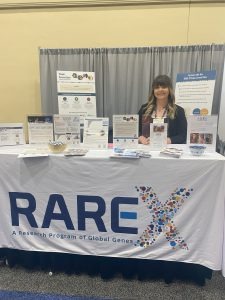
A woman stands behind an informational table at a RARE-X booth, with printed materials and signage displayed

May and June were busy travel months full of opportunities and learning for me as Director of Outreach and Development for Hope in Focus. Each year, I attend the Association for Research in Vision and Opthalmology (ARVO) Annual Meeting to hear the latest research updates for inherited retinal diseases (IRD). This conference brings together over 12,000 attendees and offers dozens of hours of presentations about therapy advances and provides a place for industry, advocacy, and the academic community to converge and connect on advancing research.

I then headed off to Sioux Falls, South Dakota, for my second year of training in the Professional Patient Advocates in the Life Sciences Certification Training Course. The course provides two tracks, one for those with a patient advocacy role in industry, and the other for those involved in nonprofit patient advocacy organizations. It is a small group with limited class sizes that provides an in-depth education on the roles and responsibilities of a patient advocate. We have important discussions on how to work together and best serve our communities, and I bring back so much of that learning into this role every day.

In June, I headed to Chicago with the Hope in Focus team to the 2024 VISIONS conference, which is held biennially and hosted by the Foundation Fighting Blindness. VISIONS brings together over 500 attendees from the inherited retinal disease community, many of whom are living with an IRD. We had a packed two days of listening to important updates and inspiring lectures, and our favorite was meeting families affected by Leber congenital amaurosis (LCA). Haydar, Gizem, and Toprak from this month’s lead story also attended and brought along another family from Turkey whose daughter has LCA1 GUCY2D. It was amazing to see them again! We also met a new family that has two daughters with LCA9 due to a mutation in their CRB1 gene.

Two presenters speak to an audience in a conference room, with a presentation slide displayed

I am so grateful for these opportunities to connect in person with all the facets of our community working to bring treatments to those living with inherited retinal disease.

A TREATMENT JOURNEY: Jumping Hurdles, Taking Risks

“If someone told me that having access to perfect vision tomorrow meant not having impaired vision for my entire life, I would not change the past. While my visual impairment has created many challenges, it has shaped who I am and influenced me in many positive ways. I’ve become more resourceful, compassionate, creative, and resilient.” —Jack McCormick

Jack McCormick lives a story of hope, tenacity, and measured success while embracing an unknown visual future. When Jack was two, a diagnosis of cone-rod dystrophy confirmed that he had impaired vision. As a teenager, genetic testing revealed that he had Leber congenital amaurosis type 2 (LCA2), due to a mutation in the RPE65 gene and that he was losing his vision. This form of LCA interferes with the production of the RPE65 protein affecting the eyes’ ability to process Vitamin A, leading to progressive vision loss. “It was tough to accept. I was only 15 and thought my life would be a certain way. Now, it was going to be different,” Jack recalled.

Fast-forward to 2022, when Jack, now 25, was treated with LUXTURNA®, a gene therapy for RPE65, becoming the first Canadian to receive a gene therapy. But his journey to treatment involved overcoming substantial hurdles with the Canadian healthcare system, even as his sight declined.

To have a chance for treatment, Jack realized he had to advocate for LUXTURNA to be available in Canada. “I wrote letters to Parliament and was interviewed on national television to create awareness and to help expedite the process,” he explained. “My vision was getting worse every time I visited the eye doctor, and my window as a viable patient for this treatment was quickly narrowing.”

Even after clearing the bureaucratic obstacles and identifying a hospital and qualified surgeons, there was still no clear path for funding the expensive treatment. “There was a year lag between Health Canada approving LUXTURNA and my lining up private funding,” he said.

While Jack wanted the treatment, the immediate or long-term outcomes were not guaranteed. His doctors set his expectations sufficiently low, saying he might see a little better in dim lighting. “My goal was to have stable vision for longer,” he said.

Jack finally received the treatment in March 2022. But the surgery was not easy. It took a long time to recover, and the effects were not immediate. His eye with the poorest vision was treated first, and the second eye was treated two weeks later.

“It is important to be realistic about the surgery. They’re injecting an air bubble and a drug into your eye. There are incisions with microscopic stitches that rub against the eye, causing an intense headache,” Jack said. “I was on my back for the first 24 hours. Later, I had to prevent putting pressure on the eye and couldn’t bend over.”

Another huge challenge was having to quickly decide after the first surgery whether to pursue the treatment for the right eye. “With my left eye, it took a week to see what I saw before the surgery,” he explained. “A few days later, my doctors began talking about the next surgery, and I still wasn’t seeing better. It was very stressful and resulted in multiple conversations with my ophthalmologists about whether to proceed.”

After weighing the risks, Jack chose to have his right eye treated. “At that point, my goal was to see as well as I did before the surgery and, ideally, a little better,” he said. “I’m very happy I did it because the treatment made a much bigger difference for my right eye.” His doctors were also pleased when testing showed vision improvement in dim lighting and an increase in color detection.

“Before the surgery, I didn’t see much walking around the city at night. Now, I might notice someone passing me. I can also see the lines of a crosswalk,” he said. “For me, these improvements are huge!” It’s unknown how long these changes will last, but it’s a future Jack is willing to live with.

His advice for people seeking treatment is to be persistent. “My obstacles were fighting the government and finding a way to pay for the treatment privately,” Jack said. “It’s also vital to find a community. It’s one thing to be a visually impaired person saying that I need this treatment. But it is much more impactful when a group says the same thing and gets others to care about it. Allying with organizations like Hope in Focus helps unite our voices while providing much-needed support and education.”

Jack McCormick graduated in 2018 from Canada’s Wilfrid Laurier University in Waterloo, Ontario. He was diagnosed in high school with LCA2 RPE65. Jack is a Hope in Focus ambassador, helping people living with LCA and IRDs. You can read his blog at jackdamccormick.wordpress.com